
Mediation for founders & shareholders · Hamburg
The team is already joking about it: the two bosses are fighting.
When the people running the company can no longer talk to each other, everything grinds to a halt. In mediation for co-founders, shareholders and boards, we clarify whether and how you go on together – before splitting up looks like the only way out, and before it becomes a case for the lawyers. The joint session takes 1.5 to 2 days, with everyone involved in the room.

Sound familiar?
Equal partners. In theory.
When founders, managing directors, shareholders or board members call me, I often hear the same sentences. Most of them have already tried everything: one-to-one talks, clear-the-air meetings, a workshop, sometimes even a mediation. And they’re worn out by the fight.
I’m often the last resort before people split up. It doesn’t have to be that way – the earlier you call, the easier it is to clear things up.
Things I hear on the phone:
- “He keeps pushing himself to the front – even though we’re supposed to be equals.”
- “She agrees in the meeting, then does something else afterwards.”
- “I’ve raised it several times. We’re just not getting anywhere.”
- “Everyone’s ganged up on me. I’m the scapegoat.”
- “We have to make a major investment decision now – and we’re deadlocked.”
- “We’ve already tried mediation. It didn’t work.”
What makes these conflicts different
Between equals, nobody can pull rank
In a team, a manager can make the call if it comes to that. Between co-founders, shareholders, co-managing directors or on a board, there’s no such shortcut: nobody can tell the others what to do. That’s why these conflicts often smoulder for months – while important decisions stay on hold and the company watches.
Structure often plays a part too: shareholdings or responsibilities that were never fully settled. The people involved are usually not even aware of it – they just feel the friction. Klärungshilfe, the form of mediation I work with, developed by psychologist Christoph Thomann, takes a systemic approach: we look not only at the people, but also at how the organisation around the conflict is set up.
Conflicts easily get personal. That’s not about you – it’s how conflict works. Trying to get “back to the facts” usually makes it worse.
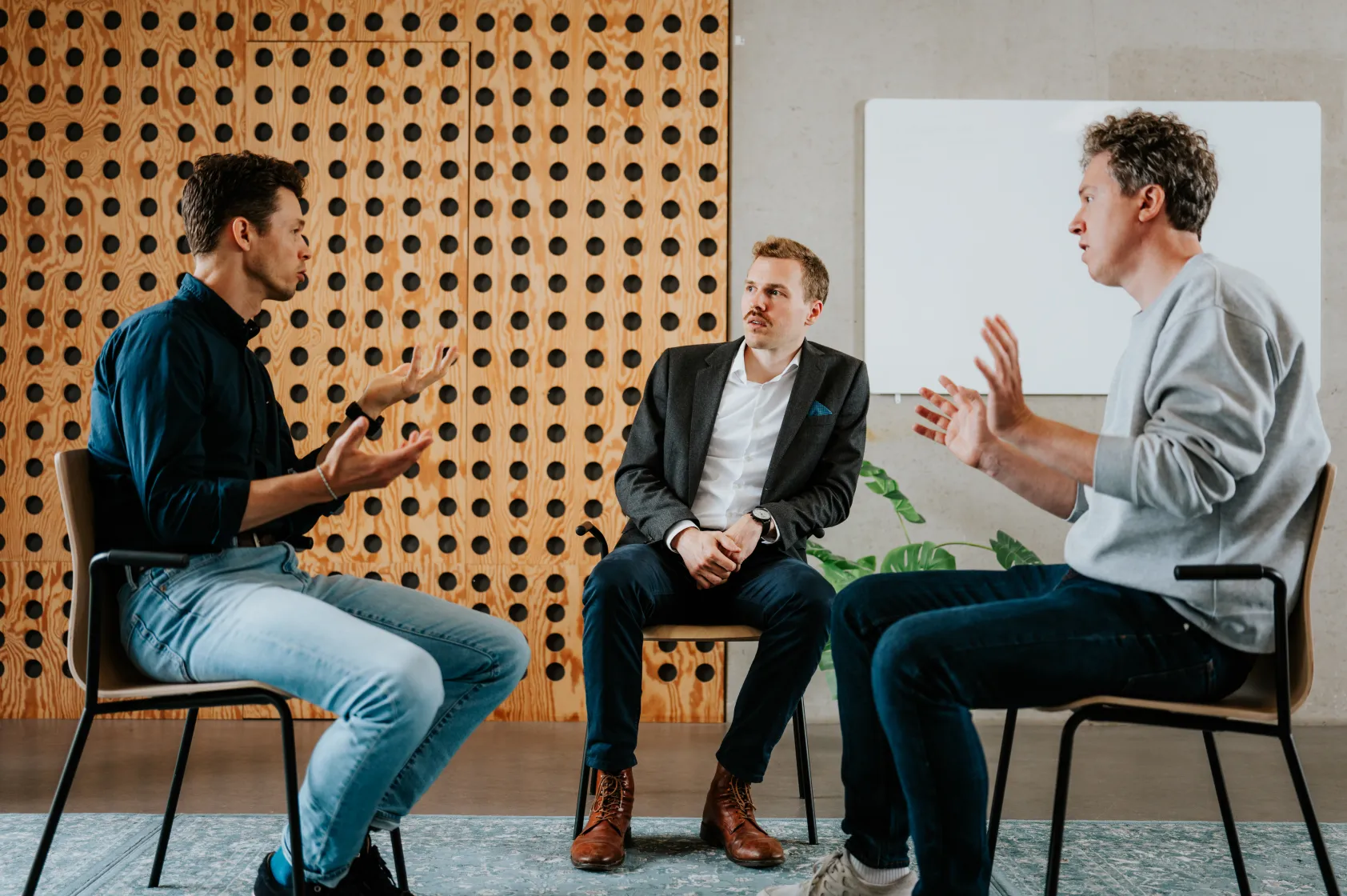
My role
On everyone’s side – not neutral
Many people fear that mediation will “get personal, with everyone just blaming each other”. I take that fear seriously – it’s what my role is for. I’m not neutral, I’m on everyone’s side; mediators call this multi-partial. I can speak up for each party in turn. Even someone who feels weak or backed into a corner gets a strong voice from me in front of the others.
That creates a setting where the personal issues can be raised – without anyone going under. How this works as a method is explained on the Klärungshilfe page (in German).
Nobody has to say anything. As long as everyone relevant is in the room, it’s enough for one party to start explaining themselves.
How it works
Clarifying whether and how you go on together
Clarity, not forced harmony: can we keep working together – and on what terms? Or is a fair separation the better way?
Clarifying the brief
A joint conversation: what needs clarifying, who belongs at the table – and what happens if the mediation fails? We discuss that openly beforehand too.
Joint session
1.5 to 2 days, with everyone in the room. Each side explains themselves without interruption – I make sure every view becomes understandable.
Going deeper
We don’t stop at the accusations; we clarify what it’s actually about. Only then do agreements hold.
Agreements
Concrete rules for working together going forward – or the basis for a clean, respectful separation. With a follow-up session.
Frequently asked questions
What founders and shareholders ask me first
Last updated: November 2026
Read on
You might also be interested in
Disagree safely, decide clearly
Don’t wait until splitting up is the only option left.
In a short intro call, we find out whether mediation is the right route for your situation – confidential and free of charge.